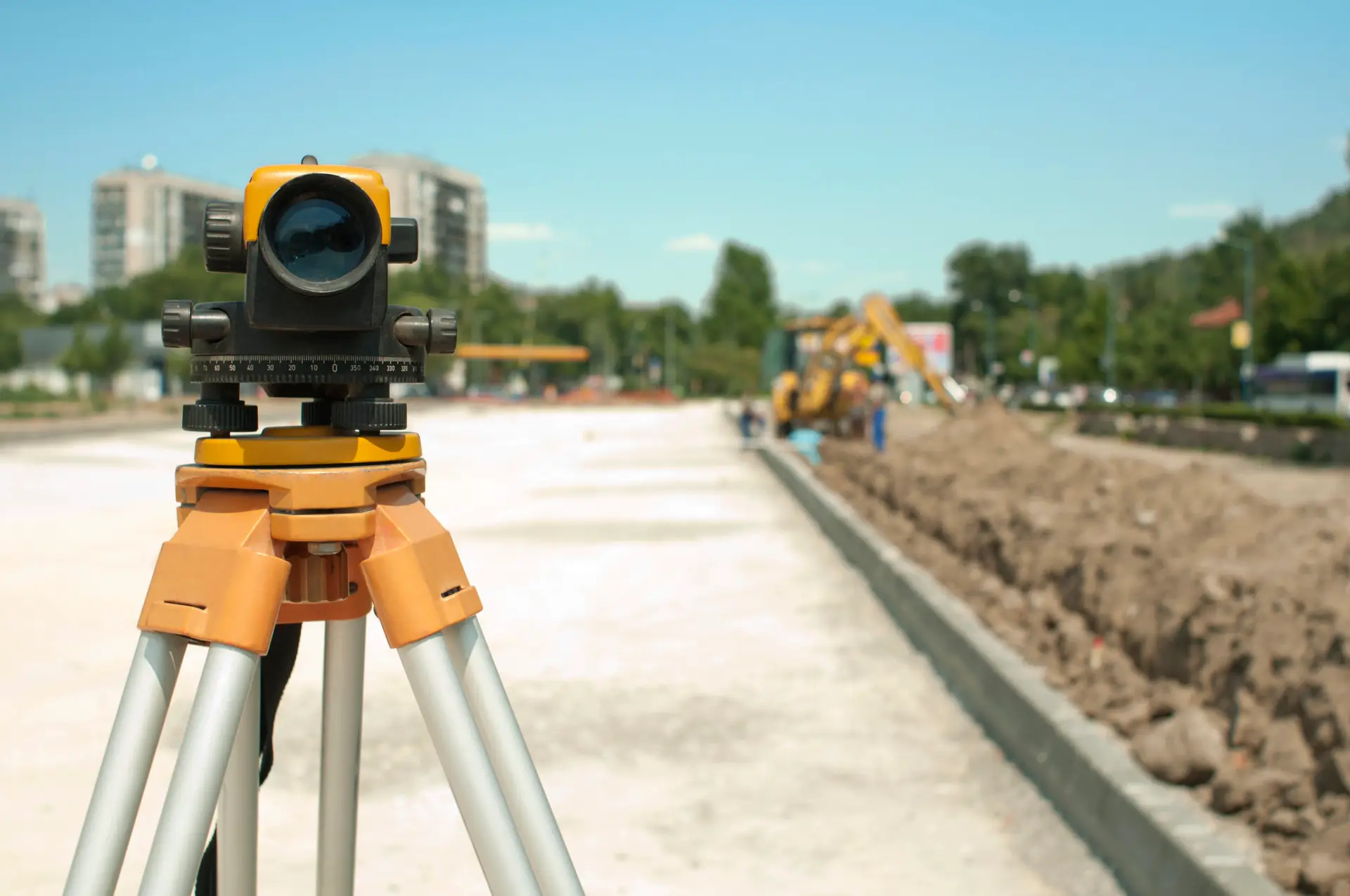
Remarkable advances in surveying have transformed how professionals measure land, replacing weeks of fieldwork with highly detailed digital models collected in a fraction of the time. Modern LiDAR technology gives surveyors the ability to gather millions of measurements across a site, producing dependable data that supports engineering, construction, boundary work, and land development with impressive precision.
How Ground Control Points Improve LiDAR Survey Accuracy
Ground control points provide fixed reference locations that anchor LiDAR data to real-world coordinates. Surveyors establish these precisely measured markers before scanning begins, allowing every laser measurement to align with verified positions on the ground. Without reliable control points, even advanced LiDAR equipment can produce datasets that drift slightly from their intended location.
Accurate control improves consistency across the entire project rather than only selected areas. Whether mapping a subdivision, preparing a property line survey, or documenting existing terrain, control points help maintain dependable horizontal and vertical accuracy throughout the finished survey. Clients searching for a property surveyor near me often benefit from firms that combine LiDAR with carefully established survey control.
The Role of Point Cloud Density in Reliable Site Mapping
Each laser pulse collected during a LiDAR survey becomes part of a massive point cloud representing the landscape. Higher point density creates more detailed digital models because additional measurements capture subtle changes in terrain, drainage patterns, structures, and surface features that lower-density datasets may overlook.
Dense point clouds also improve the quality of engineering design work. Designers can evaluate slopes, elevations, retaining walls, road corridors, and utility corridors using far more detailed information than traditional spot measurements alone. A professional land surveyor understands how point density should match the project’s intended purpose instead of collecting unnecessary data.
How Vegetation Filtering Reveals the True Ground Surface
Forests, brush, tall grass, and dense vegetation often hide the actual ground from conventional surveying methods. LiDAR systems record returns from leaves, branches, and the soil beneath them, allowing specialized software to separate vegetation from the earth’s surface during data processing.
Filtering algorithms remove unwanted plant data while preserving the underlying terrain model. Engineers and developers can then analyze slopes, drainage paths, and grading conditions with greater confidence. Property owners researching surveyors near me frequently discover that LiDAR performs especially well on heavily wooded sites where traditional measurements become more time-consuming.
Understanding LiDAR Calibration Before Field Data Collection
Successful surveys begin before equipment reaches the project site. Calibration verifies that sensors, laser scanners, inertial measurement units, and positioning systems all operate within acceptable tolerances before collecting field data. Small calibration errors can influence the overall quality of the finished survey.
Routine equipment checks help maintain consistency throughout every project. Professional survey teams follow established calibration procedures while confirming instrument performance under actual field conditions. These quality control practices strengthen confidence in the final deliverables supplied to engineers, architects, developers, and property owners.
Why Multiple Scan Positions Reduce Survey Shadow Areas
Laser scanners collect enormous amounts of information, but objects such as buildings, retaining walls, vehicles, or steep embankments can block portions of the landscape from a single scan location. These blocked sections, commonly called shadow areas, leave gaps within the dataset if additional scans are not performed.
Multiple scan positions greatly reduce those blind spots by capturing the same features from different angles. Combining overlapping scans creates a more complete digital model while improving overall reliability. Experienced survey companies near me often plan scan locations carefully before arriving on-site to maximize coverage and reduce unnecessary field time.
How GNSS Integration Strengthens LiDAR Survey Measurements
Global Navigation Satellite System technology works alongside LiDAR by supplying highly accurate positioning information during data collection. GNSS establishes geographic coordinates that connect millions of laser measurements to their proper location on Earth, improving consistency across large survey areas.
Satellite positioning also helps survey teams cover expansive sites efficiently. Transportation corridors, utility projects, industrial facilities, and commercial developments benefit from combining GNSS with LiDAR because the integrated systems maintain reliable positioning even over significant distances. This partnership strengthens both productivity and measurement confidence.
The Method Behind Verifying LiDAR Data With Field Observations
LiDAR delivers exceptional detail, yet experienced surveyors never rely entirely on automated data collection. Field verification remains an important part of professional surveying because crews compare selected elevations, structures, utilities, and property features against observations collected directly on-site.
Independent verification helps identify unusual conditions that software alone may not recognize. Ground checks confirm that the processed dataset accurately reflects existing conditions before final maps, models, or engineering files are delivered. Careful validation supports dependable results on projects ranging from residential surveys to large infrastructure developments.
How LiDAR Captures Complex Terrain Faster Than Traditional Surveys
Steep hillsides, stream channels, wooded tracts, and uneven landscapes often require significant time using conventional survey methods. LiDAR rapidly captures millions of elevation points across these challenging environments, allowing survey teams to produce highly detailed terrain models while spending less time physically traversing hazardous areas. Efficient data collection benefits both project schedules and long-term planning. Faster fieldwork allows engineers, architects, developers, and property owners to move into design phases sooner without sacrificing measurement quality. Property owners searching for a land surveyor, surveyors near me, or a reliable property surveyor near me can turn to The Land Consultants for professional surveying services. By combining advanced LiDAR technology with thorough field verification, the team delivers accurate, dependable results for residential, commercial, and land development projects.